

Send a Parcel to Australia
Ship to Australia from the UK from £11.30

Ship to Australia with Parcel2Go
Our Services and Postage to Australia
Offering the cheapest way to send a parcel to Australia, Parcel2Go shipping costs start at just £11.30. And we can have your delivery to Australia in Melbourne, Canberra, Sydney, Perth (or wherever you need it to be!) in as little as 1-3 days.
We compare the best prices and most reliable courier services so you don’t have to! Choose from express to economy, collection or drop off delivery - and with free tracking included with every parcel, you can follow your package for its entire journey.
Before You Ship to Australia
When you send a parcel to Australia from the UK with us, we’ll send you all the documents you need to get through Australian customs - but we always recommend taking a look at Australia’s customs requirements before shipping so you can be sure your parcel won’t get held up. And another tip is to avoid shipping to Australia on the country’s non-working days (Saturday and Sunday) and public holidays, because this means your delivery could take much longer to arrive.
Find the Cheapest Parcel Delivery to Australia
To send a parcel to Australia, get a quick quote now and compare the shipping prices. Parcel2Go services are suitable for a range of parcel sizes, from small packages to heavier shipments, including deliveries of up to 20kg parcels to Australia.

Sending Packages to Australia for Businesses
Businesses sending parcels to Australia can take advantage of Parcel2Go’s affordable courier services, with options to suit everything from occasional shipments to high-volume exports. Whether dispatching ecommerce orders, product samples, or bulk consignments, Parcel2Go allows simple courier comparison, offering delivery from as little as £11.30.
To streamline operations, businesses can use Smart Send, our automated shipping platform, which integrates with marketplaces such as Etsy, eBay, and Amazon, helping manage multiple orders. Businesses can also access expert guidance and support through the International Shipping Hub, which provides advice on customs regulations and documentation. Parcel2Go offers tailored solutions to help your business deliver to customers across Australia.

Our International Services to Australia

Australia Customs and Import Charges
If your shipment to Australia is under the value of $1,000 AUD (about £740*), you won’t have to pay any import fees or taxes, unless your parcel contains alcohol. It will also move through customs faster than a higher value shipment.
If your shipment to Australia is over the value of $1,000 AUD, you’ll need to lodge an Import Declaration, which will be assessed by customs and they will let you know how much duty and taxes you may need to pay. Your item won’t be delivered until all due taxes are paid.
*GBP rate may fluctuate as conversion rates change

Customs Regulations Australia
No matter what the value of your parcel is, you will have to include the correct paperwork for your parcel to clear Australian customs. Australia is famed for its strict customs standards so it's really important that you include a detailed and itemised description of your parcel's contents in the booking process. Find out more about customs declarations in our Help Centre.
It's also important to include both the receiver's full name as well as your own as the sender, as both are required by Australian customs.
We know there are more steps involved with international shipping, but don't worry. Once you complete your booking with us, Parcel2Go will send you all the right paperwork to make getting through Australian customs a breeze.
We are experts at international shipping, so if you find the idea of shipping a parcel to the other side of the world daunting, you can put your trust in us.
Our Top Tip
Remember different territories in Australia have different public holidays, so make sure you know your New South Wales from your Queensland before you book to get the most accurate estimated time of arrival for your parcel.

Australia Address Format
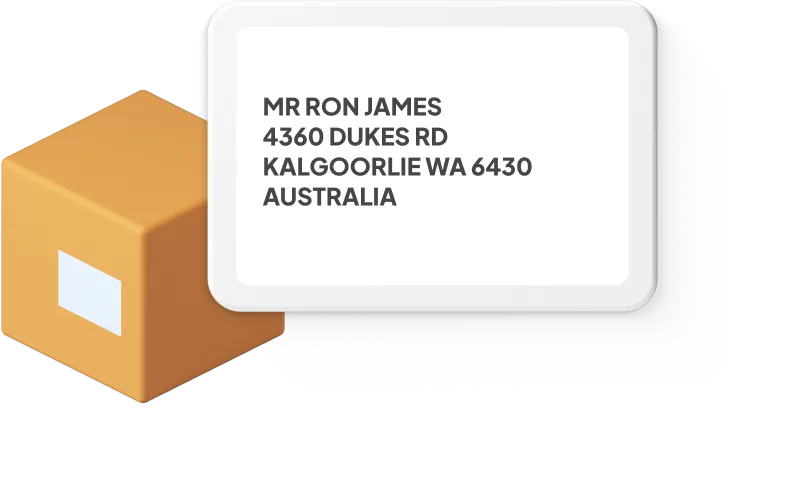
Australian address formats don’t look too different from UK addresses but there is a little bit of extra information you’ll need to include. You’ll need to put the state abbreviation on the same line as the town and the postcode, for example if it’s New South Wales, the abbreviation will be NSW. Like this:
MR RON JAMES
4360 DUKES RD
KALGOORLIE WA 6430
AUSTRALIA
Here’s more examples of how to address a parcel to Australia and all state abbreviations.
Top Couriers for Shipping to Australia
Shipping to Australia from the UK doesn’t have to be complicated. At Parcel2Go, we work with trustworthy couriers such as Royal Mail, DPD and TNT Express, which means you can trust your shipment to Australia to arrive exactly where it needs to be, when it needs to be there.



International Parcel Tracking and Protection
When you send a parcel to Australia through Parcel2Go, you'll always get free parcel tracking included to keep you in the loop on your package's location. And with our Lowest Price Guarantee, you can be sure that if you stumble upon a better deal for Australian delivery, we’ll refund you the difference.
It’s good to know that most of our courier services offer a baseline £20 parcel protection, with some carriers like Royal Mail extending coverage up to £50. For added peace of mind, you can select additional parcel protection up to an impressive £10,000, covering your shipment against any loss or damage.
Please note that while some couriers may not offer full protection for all items against loss and damage, you can check this with our prohibited items list before shipping to Australia.
Australia Prohibited Items



Frequently Asked Questions
What's the cheapest way to send a parcel to Australia?
The cheapest way to send a parcel to Australia is by comparing courier services through Parcel2Go’s price comparison tool. Economy delivery services typically offer the lowest rates, with prices starting from £11.30 for small parcels. Couriers such as Evri, Royal Mail International, and other economy providers offer cost-effective options for sending parcels from the UK to Australia. At Parcel2Go, we won't be beaten on price with our Lowest Price Guarantee.
What can't you post to Australia?
Australia is renowned for the strict customs regulations it has in place to protect the local agriculture. Because of this, some of the things you cannot send to Australia include:
Plants and soil
Cardboard boxes that have previously carried foods like fruit, vegetables or meat
Any kinds of fresh or perishable foods
Certain leathers
Item made out of or containing wood
For more, check out our full prohibited items list or contact the Australian Customs Authority before you ship your parcel to be certain you're not sending prohibited goods.
How long does shipping from the UK to Australia take?
It might seem crazy to think that you can ship to the other side of the world in just 1-3 working days, but with our express international shipping options you can do just that!
But if you're after a more affordable option, choose economy shipping from just £11.30.
Can I track my parcel when sending to Australia?
All deliveries booked through Parcel2Go come with free parcel tracking. Customers can monitor the journey of their parcel from the UK to Australia using the tracking number provided after booking. Updates are available at every major stage of the parcel’s transit.
Do I need customs documents to send a parcel to Australia?
Yes, parcels sent to Australia require customs documentation. When booking through Parcel2Go, all necessary customs forms are automatically provided during the booking process. Accurate item descriptions and correct values are essential to avoid delays at customs.
Do I pay import fees or taxes when shipping to Australia?
Parcels sent to Australia may be subject to import duties, Goods and Services Tax (GST), and other customs charges, depending on the value and contents of the shipment. Items valued over AUD $1,000 typically incur GST and customs fees, which are payable by the recipient before the parcel is delivered. Parcel2Go provides the required customs documentation during booking, but customers should inform recipients that additional charges may apply upon arrival in Australia. It is important to check Australia's customs guidelines to understand potential costs in advance.